
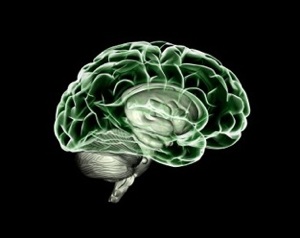
The brain is a dynamic structure. It changes with age, experience, input from the environment, and knowledge. Modifications in the strength of synaptic connections are thought to underlie learning and memory in the brain. One form of synaptic plasticity, long-term potentiation (LTP) is hypothesized to be a substrate for learning and memory. In the lab we investigate aspects of learning and memory and how synaptic plasticity is modulated by various factors such as stress, depression, and steroids.
Research Interests: Neurophysiology, Neuroendocrinology, Stress Physiology, Learning and Memory. How stress affects learning and memory. The modulation of synaptic plasticity.
Areas of Research:
We are interested in the relationship between stress, depression and neuroplasticity. Chronic stress has been shown to contribute to and exacerbate depressive symptoms in humans and in animal models. The modulation of neuroplasticity by stress may be related to depression. It has been shown that chronic stress impairs LTP, and alters synaptic plasticity in the hippocampus. Treatment with antidepressants reverses these impairments. In the lab, we study how stress affects depressive-like behaviors in rats, and the neuroplastic changes that occur in the hippocampus due to stress and treatment with antidepressants.
We are also interested in examining the effects of Panax ginseng on the modulation of synaptic plasticity in the hippocampus. Traditional Asian herbs have long been touted to improve learning and memory function, but have not been studied in-depth with Western scientific techniques. We are currently investigating the effects of whole ginseng extracts as well as its constituent active ginsenosides on long-term potentiation in rat hippocampal slices.
Another area of research we are interested in involves studying the neuroactive properties of endocrine disrupting compounds that are found in the environment. Natural estrogens have been shown to have neuroprotective effects in the brain during times of stress, but it is unknown whether synthetic estrogens have the same effect. Two compounds, Atrazine (ATR- a common herbicide) and Ethynylestradiol (EE- a commonly used contraceptive), are chemicals that are found in the environment and are known to either alter estrogen levels in the blood or mimic estrogenic activity. Using rats as a model system we have attempted to mimic the concentrations that animals may encounter in the environment by including the compounds in their diet. We assess learning and memory through behavioral tasks such as the Morris water maze and the Ziggurat task. We are also investigating the effects of these compounds on synaptic plasticity through hippocampal slice recordings.
King Lab: Research
Techniques used in the Lab:
Behavior

.
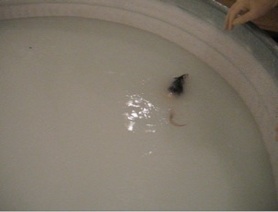
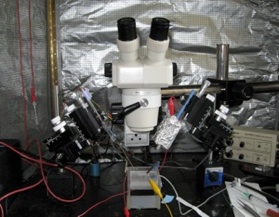
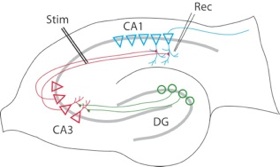

Diagram of a transverse hippocampal slice from a rat brain. These are used to study how various factors modulate synaptic plasticity.
Hippocampal slice recordings. Electrophysiological “rig” used to record extracellular signals from rat hippocampal slices
Ziggurat Task- A rat learns the locations of food rewards placed on top of pyramids made from styrofoam.
Morris water maze- A rat learns the location of a slightly submerged platform in a large pool of water.
Electrophysiology